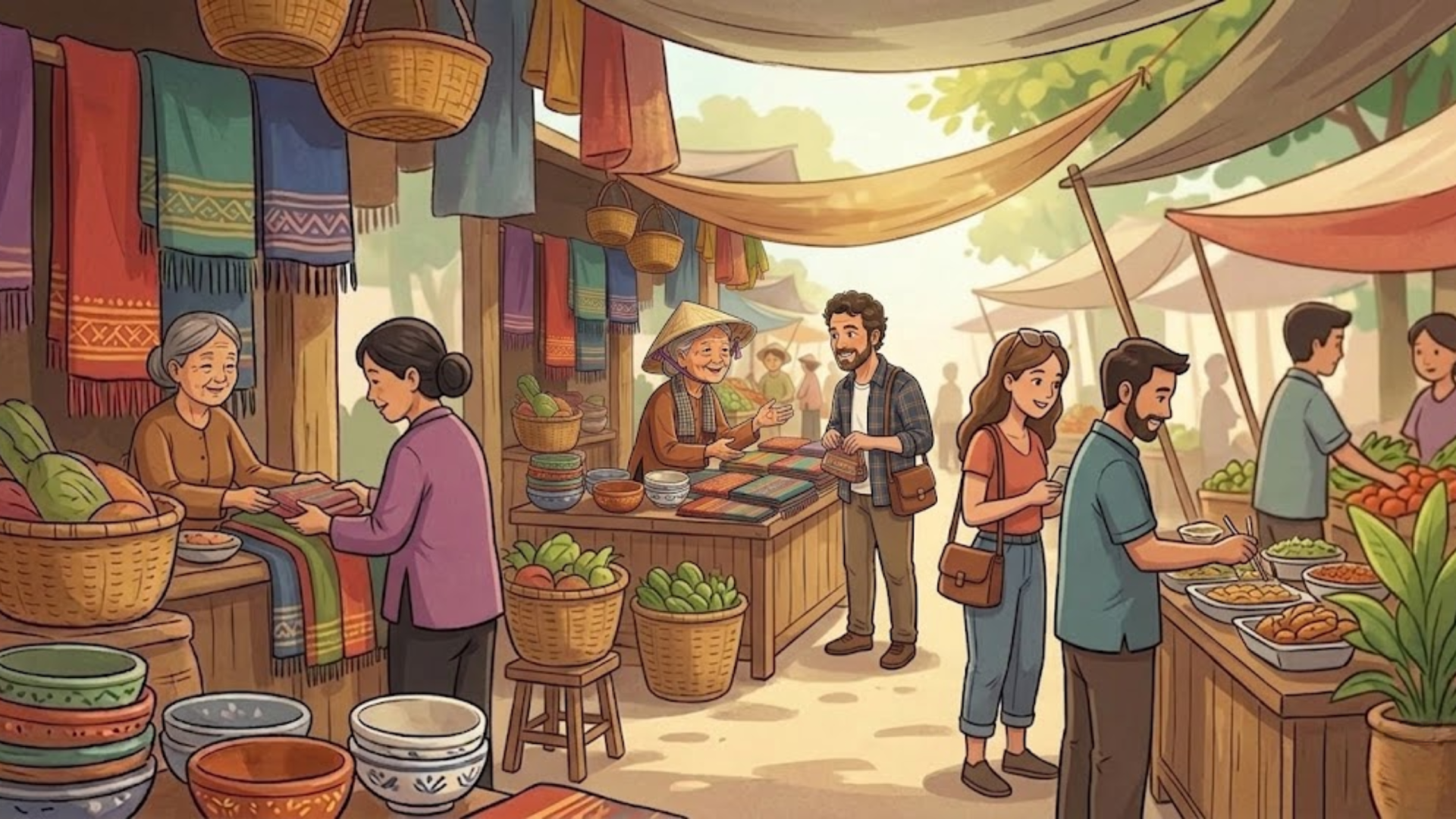
1. Is bargaining common in Vietnam? Yes, but not everywhere. Bargaining is common in:
Traditional markets
Street stalls
Some small shops (without fixed prices)
However, you should NOT bargain in:
Supermarkets
Shopping malls
Restaurants and cafés (most have fixed prices)
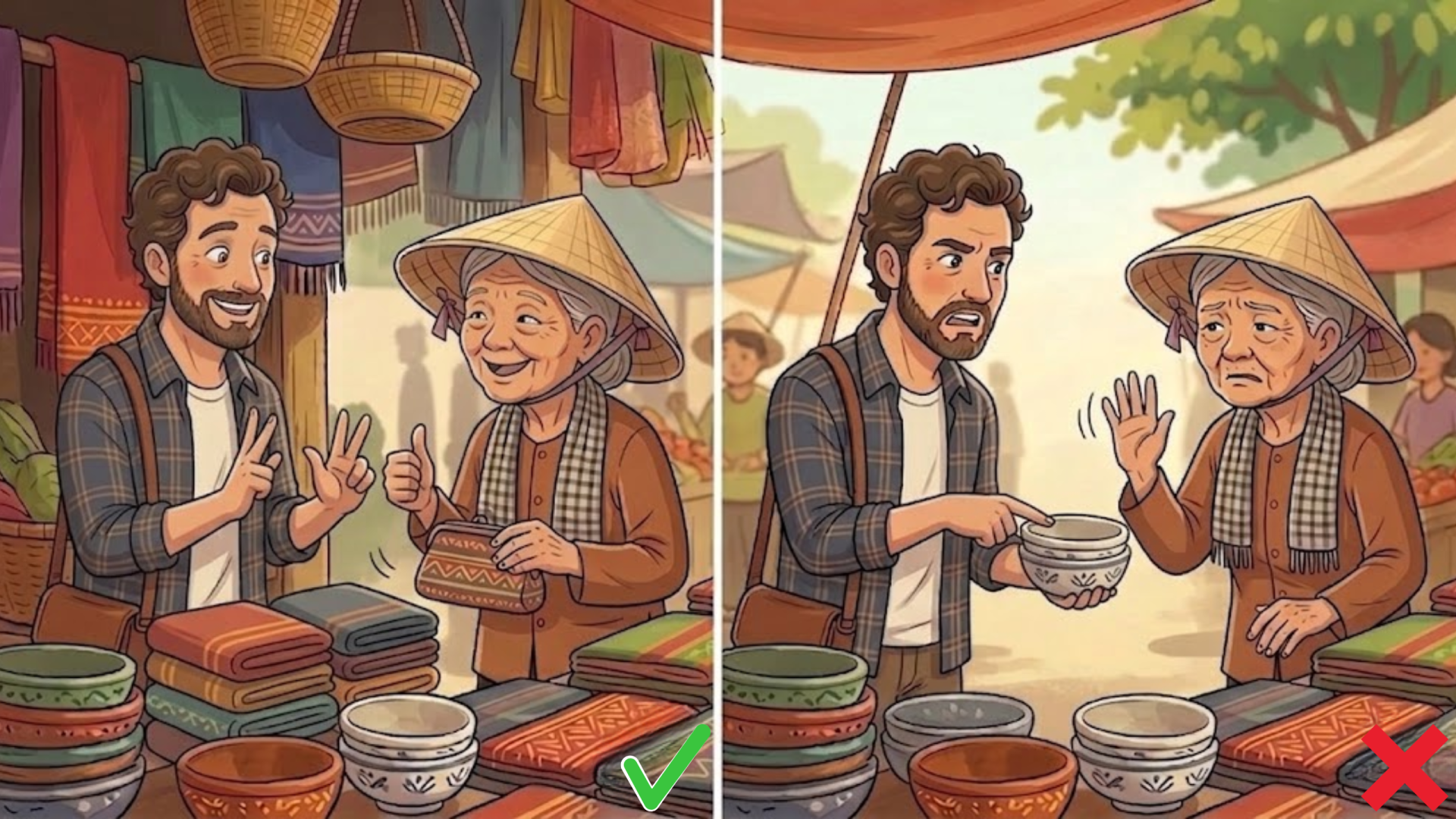
Knowing where to bargain helps you avoid awkward situations. 2. What do Vietnamese people think about bargaining? For Vietnamese people, bargaining is normal. But again, your attitude matters more than the price. If you’re polite and friendly, sellers will often:
Smile
Give a small discount
Or even add something extra
But if you bargain too aggressively or rudely, they may:
Get annoyed
Refuse to sell to you
3. Useful Vietnamese phrases for bargaining Here are some simple phrases foreigners can use right away: Asking for the price
“Cái này bao nhiêu tiền?”
“Bao nhiêu vậy ạ
Bargaining politely
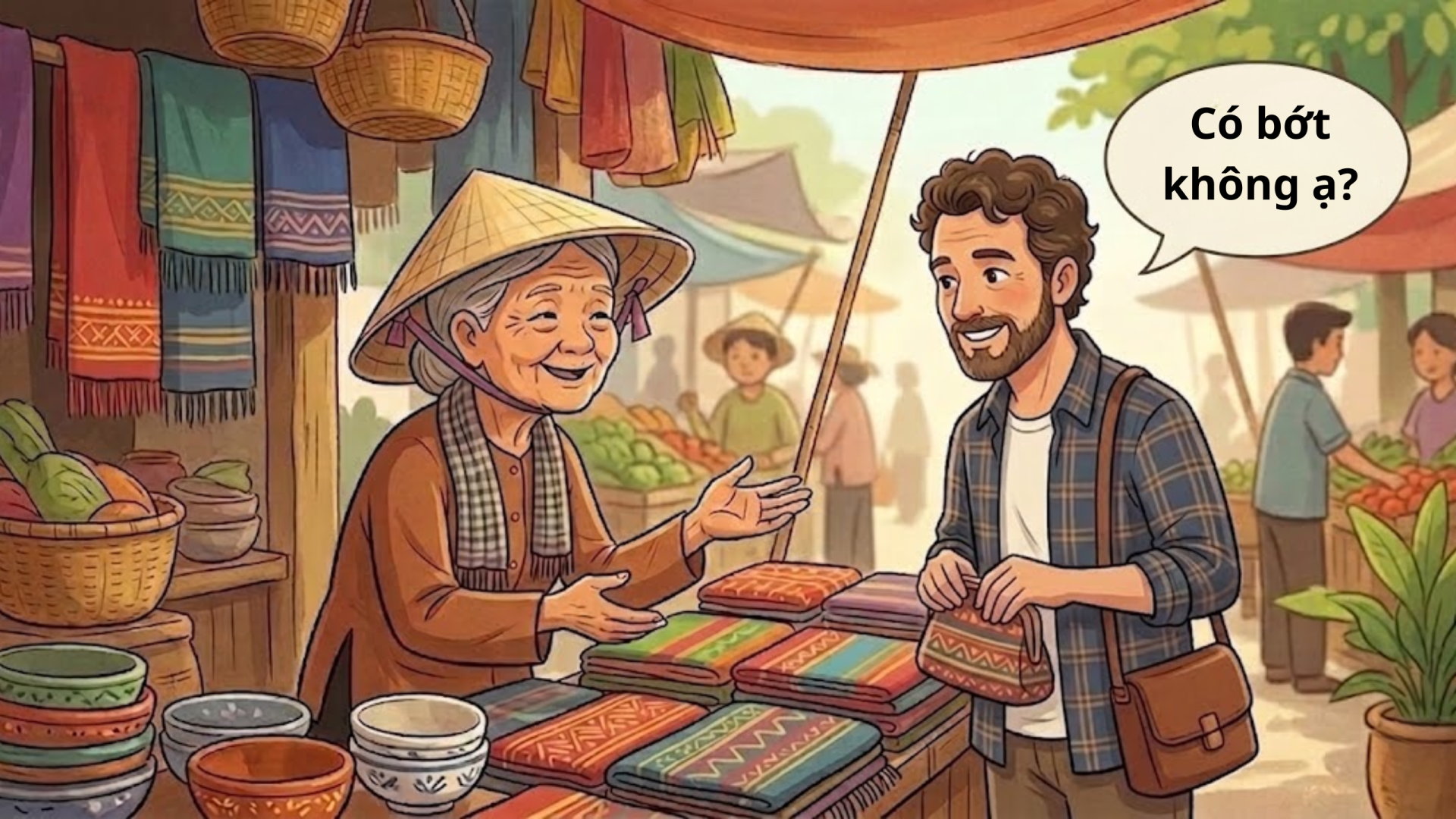
“Có bớt không ạ?”
“Bớt một chút được không ạ?”
Building rapport
“Mắc quá!”(say it with a friendly tone)
“Mình mua nhiều, bớt chút nha”
Closing the deal politely
“Ok, mình lấy cái này”
“Cảm ơn nha!”
Adding words like “nha” or “ạ” makes your Vietnamese sound much more polite. 4. Tips to bargain without losing points
Always smile and stay friendly
A smile can sometimes get you a better price than words.
Don’t offer a price that’s too low
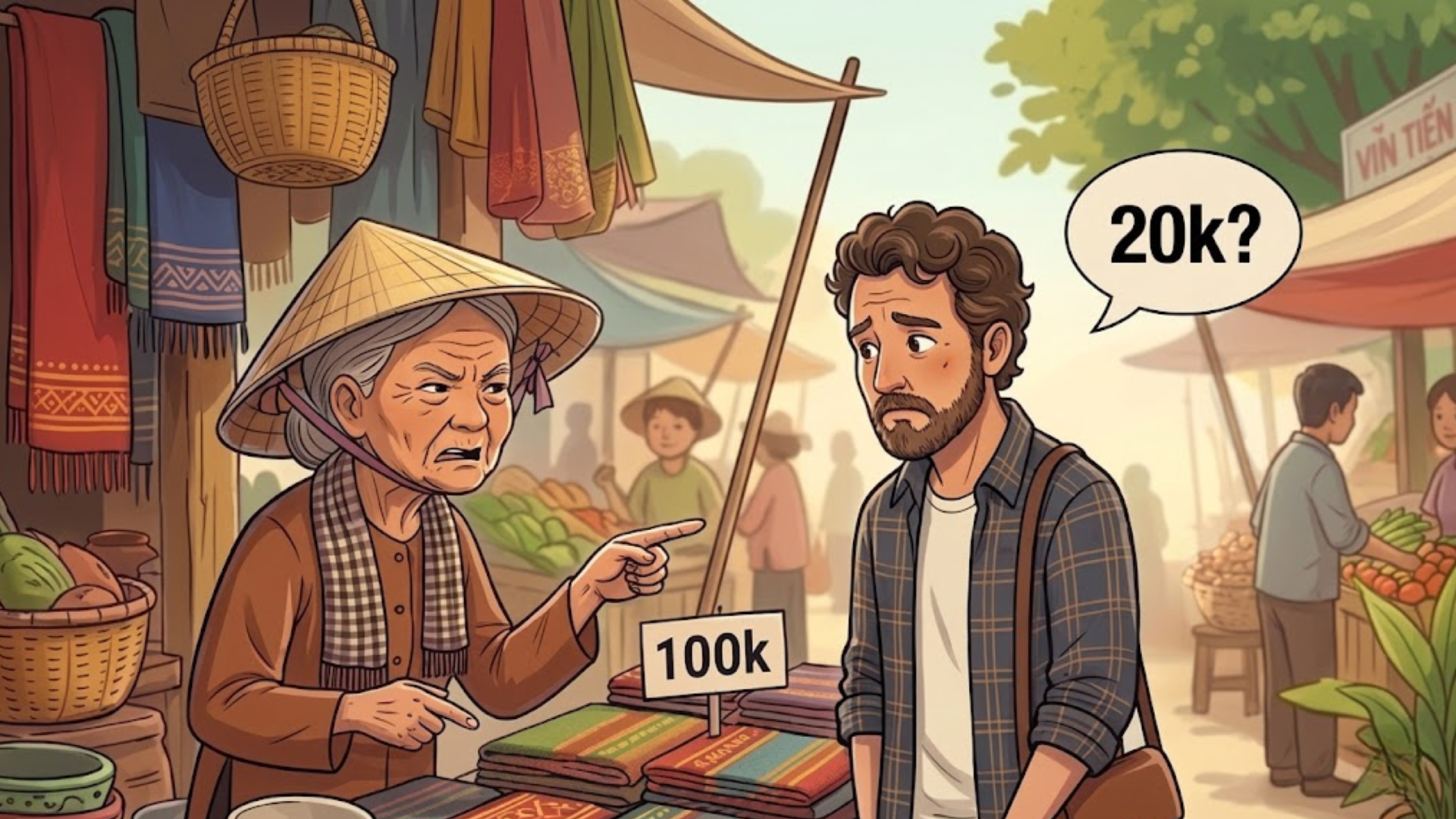
For example: Seller: 100,000 VND You: 20,000 VND ❌ (too low, likely to be rejected) Instead, try: 70,000 - 80,000 VND ✅ (more reasonable)
Be ready to “walk away”
If the price doesn’t feel right, you can say: “Dạ, mình cám ơn nha” Sometimes the seller may call you back with a better price.
Buy more to get a better deal
Vietnamese sellers often give discounts for quantity: “Mua 2 cái, có được bớt không?” 5. What to avoid when bargaining
Showing a bad attitude or forcing the price down
Saying: “Ở chỗ khác rẻ hơn!”
Bargaining but not buying (can be annoying)
Speaking too directly or impolitely
6. Small tips for foreigners
Carry small cash
Check prices at a few places before buying
Observe how locals bargain
Don’t stress - treat it as a fun cultural experience
Bargaining in Vietnam is not just about getting a lower price, it’s about communication and building a friendly connection with the seller. When you stay polite, friendly, and use simple Vietnamese phrases, shopping becomes much easier and more enjoyable. Don’t be afraid to try bargaining, with a little tact, you’ll not only get a good deal but also enjoy a unique cultural experience in Vietnam.
Getting around Vietnam by taxi or Grab is very common and convenient. However, if you don’t speak Vietnamese, communicating with drivers can sometimes be a bit challenging.With just a few basic phrases, you can easily book a ride and travel more smoothly.
Vietnam is a true street food paradise. However, ordering food in Vietnamese can sometimes feel confusing for foreigners due to the language barrier.Don’t worry! This guide will walk you through everything step by step so you can order food confidently like a local in Vietnam.
Are you learning Vietnamese and want to sound more natural like a native speaker? Be careful! Some sentences may be grammatically correct but can still sound rude or awkward to Vietnamese people. In this article, you’ll learn what you SHOULD and SHOULDN’T say in Vietnamese, so you don’t just speak correctly, but also speak politely and naturally.
Why did you start learning Vietnamese? Do you love your country, Vietnamese people, or do you want to communicate more easily?
But for whatever reason, HVAJ believes that the following reasons will make you excited about the language.
With little vocabulary, there is not much contact with Vietnamese language, it is difficult to distinguish sounds, punctuation marks, addressing systems...
.tb_button {padding:1px;cursor:pointer;border-right: 1px solid #8b8b8b;border-left: 1px solid #FFF;border-bottom: 1px solid #fff;}.tb_button.hover {borer:2px outset #def; background-color: #f8f8f8 !important;}.ws_toolbar {z-index:100000} .ws_toolbar .ws_tb_btn {cursor:pointer;border:1px solid #555;padding:3px} .tb_highlight{background-color:yellow} .tb_hide {visibility:hidden} .ws_toolbar img {padding:2px;margin:0px}
A fun and engaging Vietnamese language program designed for children to develop speaking, listening, reading, and writing skills through interactive activities, games, and real-life communication. Perfect for foreign, mixed and heritage kids learning Vietnamese in a supportive and structured environment.
New to Vietnamese? Start speaking from day one while learning the basics of pronunciation and tones through simple, practical lessons for real-life communication.
Already know basic Vietnamese? This A2 course helps you expand your vocabulary, improve speaking confidence, and communicate more naturally in everyday situations.
Already at A2 level? This B1 course helps you speak more fluently, express your ideas clearly, and handle longer conversations in real-life situations.